Drought and deluge: What El Niño could mean for mines
Mine water expert Raymond Philippe on Chile's water leadership and mining's water vulnerability.
James Stent
Deputy Director, Mining Magazine
Drought and deluge: What El Niño could mean for mines
Mine water expert Raymond Philippe on Chile's water leadership and mining's water vulnerability.
James Stent
Deputy Director, Mining Magazine
Drought and deluge: What El Niño could mean for mines
Mine water expert Raymond Philippe on Chile's water leadership and mining's water vulnerability.
James Stent
Deputy Director, Mining Magazine
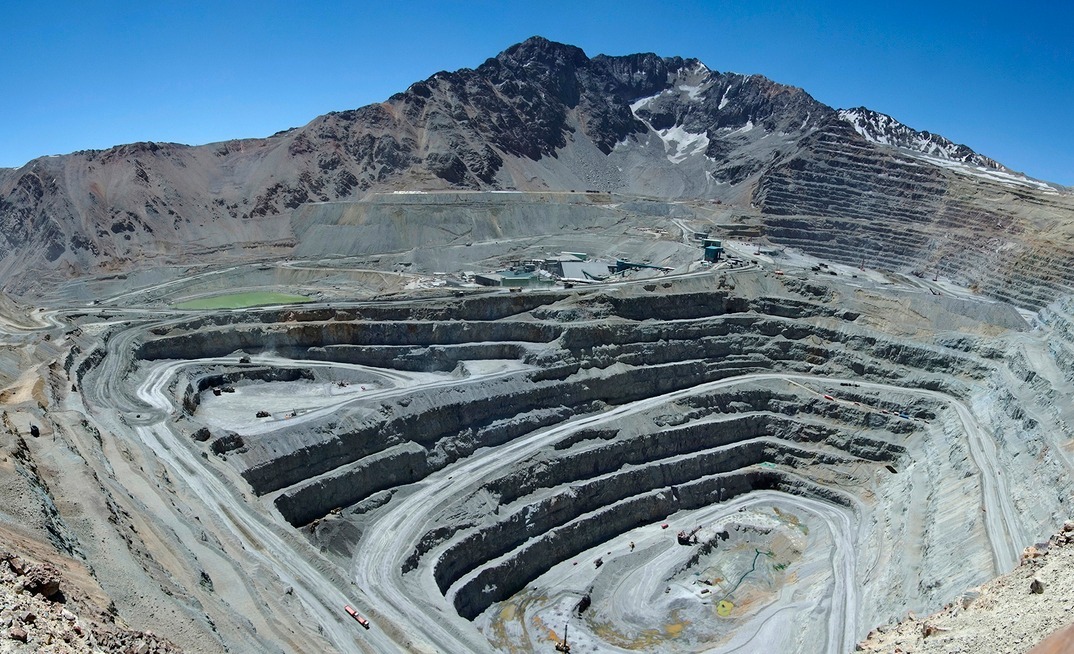
Los Bronces mine, Chile, has just received first supply from a major desalination project | Credits: Anglo American
Los Bronces mine, Chile, has just received first supply from a major desalination project | Credits: Anglo American
Los Bronces mine, Chile, has just received first supply from a major desalination project | Credits: Anglo American
The El Niño event forming in the tropical Pacific Ocean in 2026 is now the strongest in the observational record, according to the Met Office, the UK's meteorological service.
"Sea-surface temperatures in the central equatorial Pacific have now surpassed levels recorded during any previous event," the Met Office said, adding that this will have profound effects on weather patterns around the world.
"I have never seen an El Niño signal this intense in our forecasts," Professor Adam Scaife, the Met Office's head of long-range forecasting, said.
Historically, El Niño events alter global rainfall patterns. While regions like the Horn of Africa receive above-normal rainfall, Central and northern South America, the western Pacific, and southern Africa are likely to experience sustained reductions in rainfall, possibly leading to drought.
Mining is particularly vulnerable to climate variability, and already, signs of water-induced reduced capacity are showing.
Last month, Nickel Industries (NI) slowed the ramp-up of its Excelsior Nickel Cobalt HPAL project in Sulawesi, Indonesia, as "dry conditions" hampered water availability. NI said it was operating at 50% of Excelsior's nameplate capacity, but it would have to operate at 30% of capacity "until water availability normalises," in the December onset of the wet season.
"Of all places, drought in Indonesia," mining water expert Raymond Philippe said.
"The trend of precipitation in these regions of annual precipitation has gone down. But when there is precipitation, it is more extreme," he said.
The mudslide that killed seven workers at Freeport-McMoRan's Grasberg copper mine stands as a tragic reminder of the risk that an excess of water commands.
Mining Magazine spoke to Philippe about some of the dynamics that the mining industry might encounter as the effects of the "super" El Niño develop over the coming year.
Philippe, formerly of Skarn Water, is now heading up Sustainable Mine Water Management, an advisory firm working at the intersection of mining, water and finance.
"If you don't have water, you don't have mining," he said - a phrase that functions as his motto.
Chilean preparedness
Philippe's many years as a mineral processing and environmental engineer, including many years in Chile, have seen him work on some of the largest mining water projects on the planet.
He recalled that the major El Niño event in 2015 and 2016 (which also coincided with the impacts of retreating glaciers) sparked major changes to the way in which Chile's mines viewed water.
Major copper producers, exposed to drought, missed production targets due to a lack of water availability. In the aftermath, mines began looking for alternative water supply systems.
In 2017, Philippe served as the first project manager on Anglo American's integrated water supply project, part of its water solution for the Los Bronces copper mine.
Last month, nine years later, the miner announced its first water supply from desalination plants for Los Bronces. The Andean mine will receive up to 500l/s of desalinated water from Aguas Pacífico's multipurpose plant in Valparaíso, "more than 45% of the mine's water needs."
Anglo's desalination infrastructure will also supply local communities with 25l/s of water.
This type of investment has not become uncommon in Chile.
"I think it is the country that has mitigated its exposure to drought the earliest," Philippe said.
Phillipe explained that Chile's historical extreme water vulnerability has meant its preparation for drought conditions exceeds that of other territories.
"Water is, for most, a cost factor."
In Chile, however, miners stopped taking water access for granted, Philippe noted. In the wake of that consensus, a raft of major water projects entered development.
Its seawater supply systems come at a cost, "but now they're in, it's not a risk anymore."
"I think right now we have eight water projects over $1 billion operating in Chile."
"I think if you compare that to other locations, it's going to position Chile in a better place compared to others that have not yet adapted to what will be coming at them."
Water vulnerabilities
Philippe did not appear convinced that other regions are as well prepared for drought or deluge.
Zambia, reliant on hydro power, could face major problems, and he had questions about the southwest USA, some areas of Peru, and Brazil.
"Is there any operation in the US that can have its diesel plant up and running in the next ten years?" he asked.
In his experience, water access risks were too often evaluated in an independent, isolated context.
"If you, as a mine, are operating in a location and there is a drought period, is that only you?" he asked. "The first one to be cut off from water will be the mining operation, before the farmers and before the population."
"When it happens, it comes at you and your business is gone."
The contrast with the forward planning seen in Chile is stark.
"At Los Bronsos, it took nine years to implement," he said. The decision to invest was taken in 2022/23 after five years of preliminary work.
"If you're seeing who is spending money on water, it's only those operations that are now seeing the effects of the restriction. And if you're spending it now, you might see a solution in five to ten years' time."
What is coming is more extreme weather, with the effects of climate change amplifying cyclical weather phenomena like El Niño.
"Most climate change risks deal with water at the end," he said.
This insight is brought to you by Mining Magazine. Explore more mining industry news, trends and expert analysis at Mining Magazine.



Beware of scammers
Please beware of people offering to sell Future of Mining's delegate list. We would like to make you aware that Aspermont and any of its brands do not sell data to third parties. Anyone pretending to be someone from Aspermont trying to sell delegate list is a scam. Please do not share your details or any credit card information. For more information on Aspermont's data policy, please visit our Privacy Policy page

Aspermont
Aspermont turns proprietary data into decision-ready intelligence for the people who invest in, operate and lead across mining, energy and agriculture.